
Why I helped create structured maths practice books for the new Maths and Statistics Curriculum in NZ
Jackie Andrews discusses the challenges primary schools face with the new Maths and Statistics Curriculum NZ, and why she felt the need to help.
The Maths Practice collection has been developed specifically to support New Zealand primary teachers as they implement the new Mathematics and Statistics Learning Area (Te Mātaiaho). Working systematically through the Year 4 teaching sequence, it provides structured practice activities that complement and strengthen classroom teaching programmes.
Written by experienced New Zealand teachers with deep curriculum knowledge, these resources give teachers a practical, curriculum-aligned tool they can use straight away. It reduces planning time and helps students build the mathematical understanding, fluency, and confidence they need to succeed.
When students have secure mathematical knowledge, they can access learning across all subjects. Foundational skills like place value, number structure, and pattern recognition don’t just support maths. They build the logical thinking, problem-solving, and confidence that underpin success across the curriculum and into adult life.
Maths Practice helps teachers build those foundations with clarity, consistency, and purpose. When foundational maths is taught well and practised regularly, students are far less likely to experience the gaps that widen over time and hold them back later.
The new maths curriculum presents real challenges. Teachers need to understand updated achievement objectives, plan coherent programmes across the year, and support student progression, all without increasing their workload. It eases that pressure by providing structured, systematic activities that are already curriculum-linked. Teachers can see exactly how what students are practising connects to what they are expected to learn.




Each book in the Year 4 series is built around the structure of the new Mathematics and Statistics curriculum, which is organised around five strands: Number, Algebra, Measurement, Geometry and Statistics. Every activity is explicitly curriculum-linked, so teachers can use the books knowing that what students practise aligns with what they are expected to learn in Year 4.
Whether you’re using the books for whole-class consolidation, targeted small-group work, or independent practice, the activities are designed to work with your teaching programme rather than alongside it. Use them to supplement a lesson, support revision, or provide structured follow-up for students who need additional practice. The books adapt to your classroom. Not the other way around.
Browse by curriculum strand and find the right activities for your classroom.
The new maths curriculum asks a lot of primary teachers. Understanding the updated achievement objectives, planning a coherent programme across the year, and supporting student progress all take time and confidence. For teachers who are still getting to grips with the new content, that pressure is real.
When students don’t get the structured practice they need, gaps appear quickly and are hard to close. Confidence drops, and learning becomes harder to build on.
That is exactly what these books are built for. Each title works through the Year 4 teaching sequence in order, with a clear focus on a specific curriculum strand. The activities are ready to use, clearly connected to what you are expected to teach, and built to fit into your programme rather than add to it.
These are not just activity books. They are curriculum-support tools developed in New Zealand, by New Zealand teachers, for New Zealand classrooms.
These books will help teachers with the massive learning curve of the new curriculum and the changes that have been bought in. They will help them increase their knowledge and show how the content is linked to the new achievement objectives.”
Jackie Andrews, AUTHOR
Every activity connects directly to the new Mathematics and Statistics Learning Area (Te Mātaiaho) and the teaching sequence. Teachers can use the books knowing that every practice task aligns with what students are expected to learn, giving them confidence in their curriculum coverage without additional planning.
The books work through the curriculum progressively, building in complexity as students develop their understanding. This supports genuine fluency and retention over time, rather than isolated, one-off tasks that don't connect to a wider learning journey.
Each book is organised around one of the five curriculum strands: Number, Algebra, Measurement, Geometry and Statistics. This strand-by-strand structure gives teachers a clear framework for balanced practice across the full curriculum. It also makes it easy to find the right resource for the right moment in their teaching programme.
Ready-to-use activities mean teachers spend less time building practice material from scratch and more time focusing on high-quality teaching. The books slot into existing programmes with minimal preparation, saving time without compromising on curriculum alignment or rigour.
Activities can be used for whole-class consolidation, targeted small-group instruction, or independent practice. This makes it easy to meet the needs of diverse learners within the same classroom. The books work with your teaching, not against it.
Developed by practising New Zealand teachers with deep expertise in the new curriculum, every activity is grounded in real classroom experience and reflects the realities of New Zealand primary teaching, making the resources immediately applicable, relevant, and trustworthy.
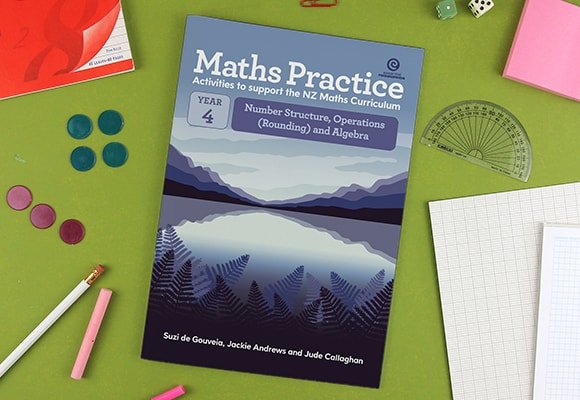
Targeted practice activities to support teachers in developing students’ understanding of place value, number structure, and rounding within the Year 4 teaching sequence. Curriculum-aligned and classroom-ready.
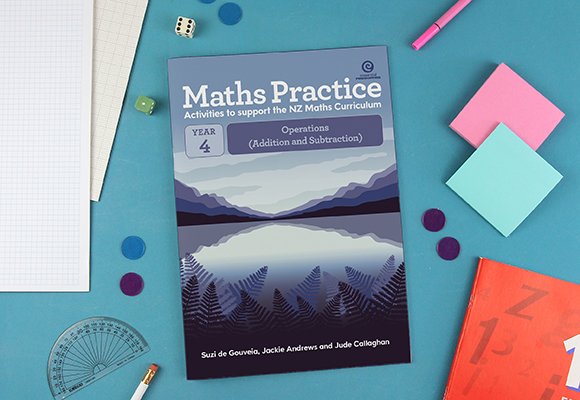
Structured activities that build student fluency and confidence in addition and subtraction strategies, with a clear focus on the Year 4 achievement objectives. Designed to complement and reinforce classroom teaching.
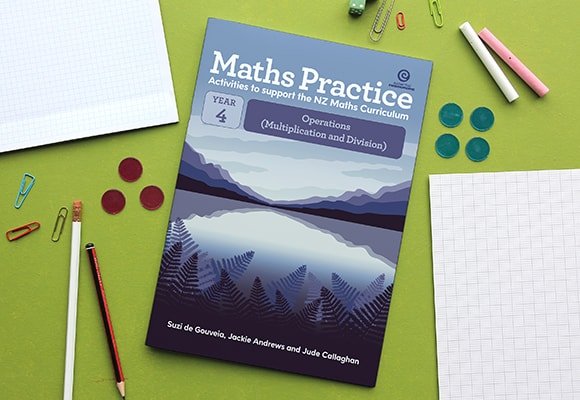
Practice activities focused on building multiplicative thinking and division strategies at Year 4. Supports progression from early multiplication concepts through to more complex problem-solving.

Targeted activities to strengthen student understanding of fractions at Year 4, including part-whole relationships, equivalent fractions, and simple operations. Curriculum-linked and flexibly structured.
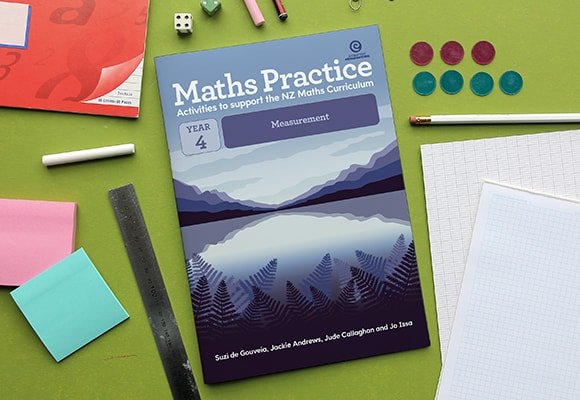
Targeted practice activities covering measurement concepts at Year 4 – including length, area, volume, and time. Curriculum-linked and ready to use alongside your teaching programme.
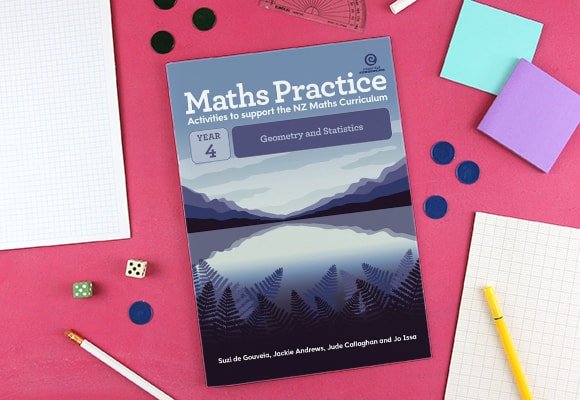
Practice activities covering shape, space, and data at Year 4. Students develop knowledge and skills across geometry and statistics through structured, curriculum-aligned activities.
These books offer more than practice pages. Built for teachers navigating the shift to the new Mathematics and Statistics curriculum, they keep student outcomes front of mind. Each book provides clear, structured activities that slot directly into existing teaching programmes, making the transition to new expectations manageable without adding to your workload.
Whether you are new to the curriculum, refining your approach, or building a stronger whole-school maths programme, it gives you a reliable, structured foundation to work from. Practical, curriculum-aligned, and built for New Zealand classrooms.

Jackie Andrews discusses the challenges primary schools face with the new Maths and Statistics Curriculum NZ, and why she felt the need to help.

You know the six strands and the phases of learning – but how do you turn that into a Year 4 maths programme that sticks? This post unpacks how structured, curriculum-aligned practice bridges gaps in fluency, basic facts and confidence.
Jackie Andrews discusses the challenges primary schools face with the new Maths and Statistics Curriculum NZ, and why she felt the need to help.
You know the six strands and the phases of learning – but how do you turn that into a Year 4 maths programme that sticks? This post unpacks how structured, curriculum-aligned practice bridges gaps in fluency, basic facts and confidence.