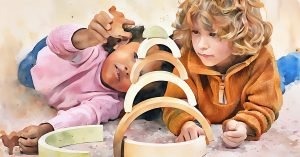
The positive impact of play-based learning in early childhood
Play is how young children make sense of their world. Explore what play-based learning looks like, why it matters under the EYLF and Te Whāriki, and practical ideas you can try this week.
Play is how young children make sense of their world. Explore what play-based learning looks like, why it matters under the EYLF and Te Whāriki, and practical ideas you can try this week.

Who is Making Theories Visible for and how does it help? We answer common questions about this practical guide to early childhood thinking-with theories in everyday ECE practice.

Meet Susan Grieshaber, Alistair Gibbs and Louise Hennessy, the authors of Making Theories Visible. In five quickfire questions, they share what keeps them inspired and one small step you can take tomorrow to bring theories to life.
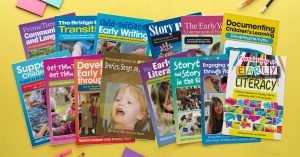
Found a resource you love? We’ve paired popular early childhood education resources with fresh picks to try next, covering theories into practice, children’s interests, inclusive education and growth mindset. Your next favourite is waiting …

Progress, not perfection. Fiona Boylan explores how a growth mindset benefits ECE and primary educators, helping children build resilience, confidence and a lifelong love of the learning journey.

Discover practical strategies for supporting emotional regulation in early childhood with author Niki Buchan. Help young children manage big emotions and build lifelong skills.

Discover how Abby Zhong enhanced her children’s social and emotional skills with professional learning, using real strategies to tackle challenging behaviour.
As Centre Director, Simone Miles leads by example, inspiring her team to embrace cultural inclusion and build genuine connections with every family.
Create inclusive, communication-friendly ECE spaces with Anne Vize – where every child can express themselves, connect meaningfully, and thrive through purposeful planning.

Developing a growth mindset in early childhood sets the stage for lifelong learning and success. Fiona Boylan explores what a growth mindset looks like, its benefits in early childhood, and how to foster growth mindsets in early learning environments.

Renowned author and researcher Andrea Nolan describes how early childhood theories provide a lens for how we see children and childhood that shape our practices.

While all play might look the same, children engage in different types of play as they progress through their early years. There are six stages of play in a child’s social development – from playing by themselves to later with a group.

Temper tantrums, curiosity and a new social world are all part of children’s early years. It is also a time of rapid development, where early childhood educators lay the foundations for children’s social and emotional development.

The transition from early childhood (ECE) to primary school impacts children and their family. Communication and pedagogical awareness are crucial elements for transition.

Experienced educator and recognised author, Anne Houghton, sets intentional teaching in its big-picture context to show its potential as an effective pedagogical practice.

Creating environments that spark curiosity and wonder is not difficult and yet, at times, infant environments in early childhood settings can be sterile or uninspiring. Here I explore the notion of creating environments that spark curiosity in infants.

Being new early childhood educators can be overwhelming. There are many challenges that present differently in the real world compared to studying early childhood education and care.

The practice of planning provision around schema rests on the premise that by noticing strong drives or interests in children, educators can support development.

Bridie Raban discusses how early childhood educators have a significant role to play in children’s learning by supporting children’s change over time.

There has been steadily increasing interest from outside the EC sector in what can be achieved through high quality education and care. One of the keys is reflective practice.

What does it mean to be an early childhood education and care professional? Andrea Nolan answers this important question.