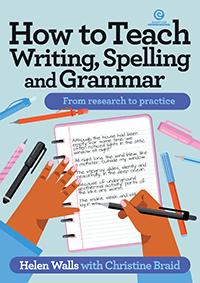
How to Teach Reading Cover

How to Teach Reading

Research-based strategies for success with decoding and comprehension

Extensive research has revealed a range of components that contribute to effective teaching of reading. Yet few reliable resources have translated that evidence into a format that teachers can put to use in the classroom. Enter How to Teach Reading: Research-based strategies for success with decoding and comprehension, an accessible guide on how to harness key research insights to benefit students’ reading skills.

This informative resource unpacks the science of reading in plain language, as well as providing insights into the “code” of written English that will help in developing meaningful reading programmes. From these foundations, it describes effective strategies for teaching decoding and comprehension that build from the research findings on “what works”. After outlining methods for teaching word recognition and language comprehension, it brings all of this together in a comprehensive literacy programme. Other keys to success addressed in this resource are teaching approaches with students who have reading difficulties and how to use children’s literature to give students a strong sense of why they want to be a reader.

Are you looking for more hands-on support? Check out our How to Teach Writing, Spelling and Grammar professional development course.

Please note, this title is available in a secure digital format through VitalSource to help protect the authors’ work and ensure compliance with copyright legislation. Further information is available in our FAQ's.

Ages: 5-13 | Pages: 116 | Code: 51290 | ISBN: 9781991134868

NZD
Add to cart
or more each
Book (physical) - A good old fashioned printed book, ideal if you like the feeling of holding it in your hand as you flip through the pages. We will ship your books from our warehouse within 1-3 days.
Ebook (VitalSource eBook) - You can access this book online via a web browser or offline using the VitalSource Bookshelf App. This format allows you to read, highlight, and annotate the material. VitalSource eBooks are available immediately after your purchase is confirmed, and you will receive a link to access your eBook. Please note, this is a change from our previous PDF format, made to better protect the authors' work and comply with copyright legislation.
Combo (book & Vital Source ebook) - Need the flexibility of a print and digital version at your fingertips? Printed books allow you to share and pass around the resource with your colleagues. The Vital Source ebooks are available immediately, you can read, highlight, annotate and create flashcards online, or for offline access download the Vital Source Bookshelf App (Mac, PC, iOS & Android). Vital Source ebooks are best used on your device as they have limited printing functionality.

Orders are normally dispatched within 1 to 3 business days. Goods are shipped by New Zealand Post or by local courier, depending upon the location, with a delivery expectation of 1 to 3 business days. We will email dispatch confirmation and tracking details.

International Orders
We are happy to supply orders from outside Australia and New Zealand. Orders will be dispatched by International Air which has delivery expectations of 3-21 business days depending upon your location.

Returns
We offer a 14-day inspection with freepost return on all printed products.
Please be aware that we cannot offer an approval period or accept returns on digital resources, so orders for these resources are final.

Credit Card - Pay securely with Visa or Mastercard when you check out.

Invoice your school - Select your school when you check out. You will need a school order number.

Picture of Helen Walls

Helen Walls

Dr Helen Walls is a professional learning facilitator and educational researcher, with 20 years’ experience working in schools. She is committed to raising achievement in writing by sharing evidence-based, practical methods to engage every student. Helen is managing director of The Writing Teacher, a consultancy that provides writing workshops and resources for teachers, all accessible online. She is also a member of the Massey University school support team. For her PhD thesis, Helen conducted two empirical studies into the teaching of writing, which included a trial of the Fast Feedback Formative Evaluation System outlined in this book. She has published with The Australian Journal of Learning Difficulties and The Education Hub.
Picture of Christine Braid

Christine Braid

Dr Christine Braid has 40 years’ experience as an educator, including 12 years as a classroom teacher and 25 years as a teacher educator with a focus on literacy teaching. In her academic studies, she has specialised in literacy: she has a Diploma of Children’s Literature, her MEd thesis looked at using picture books for developing comprehension discussion with older primary students and her PhD examined the influence of teacher knowledge and practice on literacy outcomes for new primary students. Combining her practical and her experience, Christine works with teachers to promote systematic and explicit teaching and to provide opportunities for incidental learning. Christine has a particular enthusiasm for finding ways to inspire teachers and children using books.

Contents

Introduction5
Who this book is for5
How to use this book5
1 . Theories of how we learn to read6
What is reading?6
The Simple View of Reading6
The Cognitive Foundations Framework7
From alphabetic coding to automatic word and recognition: Share’s self-
teaching hypothesis Ehri’s orthographic mapping11
Final thoughts14
2 . How the code of written English works15
Introduction to the code of written English15
Phonetics: The key starting point16
Morphology21
Sentences25
Final thoughts27
3 . How to teach word recognition28
Stages in the development of word recognition29
What to teach: A suggested scope and sequence31
How to teach: Formative assessment is key31
How to teach: Teach phonics systematically, explicitly and as one part of
language enrichment35
How to teach: Maximise teaching time with whole-class and small-group
teaching38
What’s next?45
4 . How to teach language comprehension46
Many skills are needed for language comprehension46
Approaches that work for teaching language comprehension48
What’s next?53
5 . Planning a comprehensive classroom programme54
Overview of both junior and senior programmes54
The literacy block in junior classes55
The literacy block in senior classes 60 What’s next?64