The texts we use to support our teaching of reading come in different styles to cater for a range of approaches and needs. They include decodable texts, controlled language texts, natural language texts and authentic texts. We can also consider categories of texts in terms of fiction or nonfiction, picture book or prose, and paper-based or web-based.
Choices of texts for learner readers
Decodable texts focus on specific letter patterns, usually following a scope and sequence of phonic patterns that gradually increase in difficulty. Generally, beginning-level texts use very controlled consonant–vowel–consonant (CVC) word patterns with a few letters (eg, s, a, t, p, I, n). Next they move to all the single letters, followed by double-letter spellings and digraphs. The higher-level texts include long vowel and other vowel sound spellings.

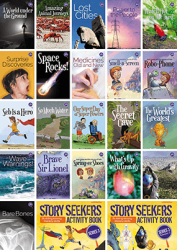
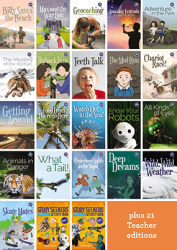
Controlled language texts use a lot of high-frequency words, usually introduced in a particular sequence. Traditionally, the word lists have been from Fry or Dolch. A more recent list comes from Green and colleagues. They devised it from a study of over 2,000 picture books identifying the most common words learners need to access authentic literature. The texts follow clear guidelines for sentence construction, including the number of words in a sentence. Other requirements are to use mostly simple and compound sentences, plus a few short complex sentences. The texts control the challenge and so are useful for developing readers. Examples include PM readers for younger readers and Story Seekers for older readers.
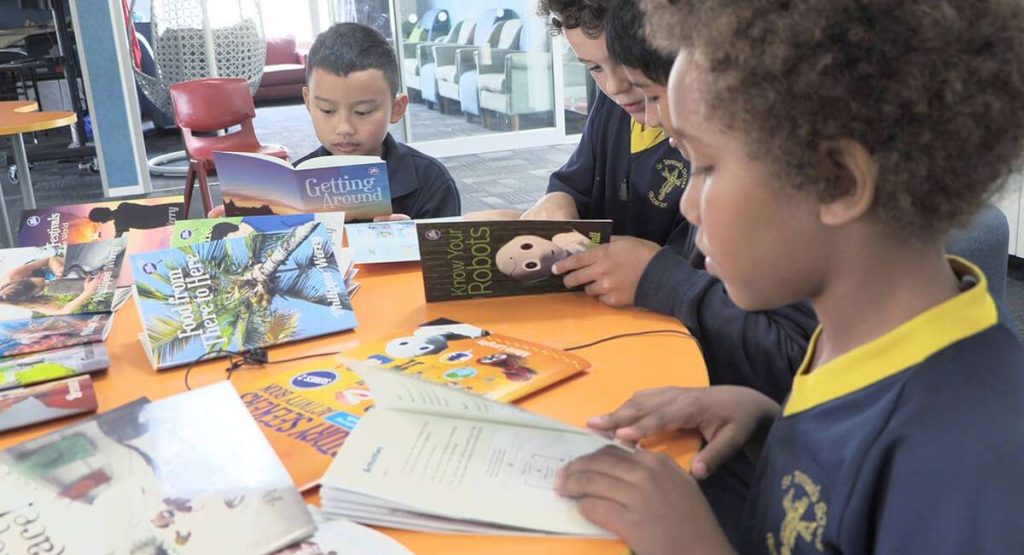
Natural language texts still contain a level of control to support early and developing readers. Their guidelines for readability and sentence structure are clear but are less strict than the controlled texts. High-frequency words are introduced gradually but the books include more challenge with interest words and multi-syllable words, as in natural speech.
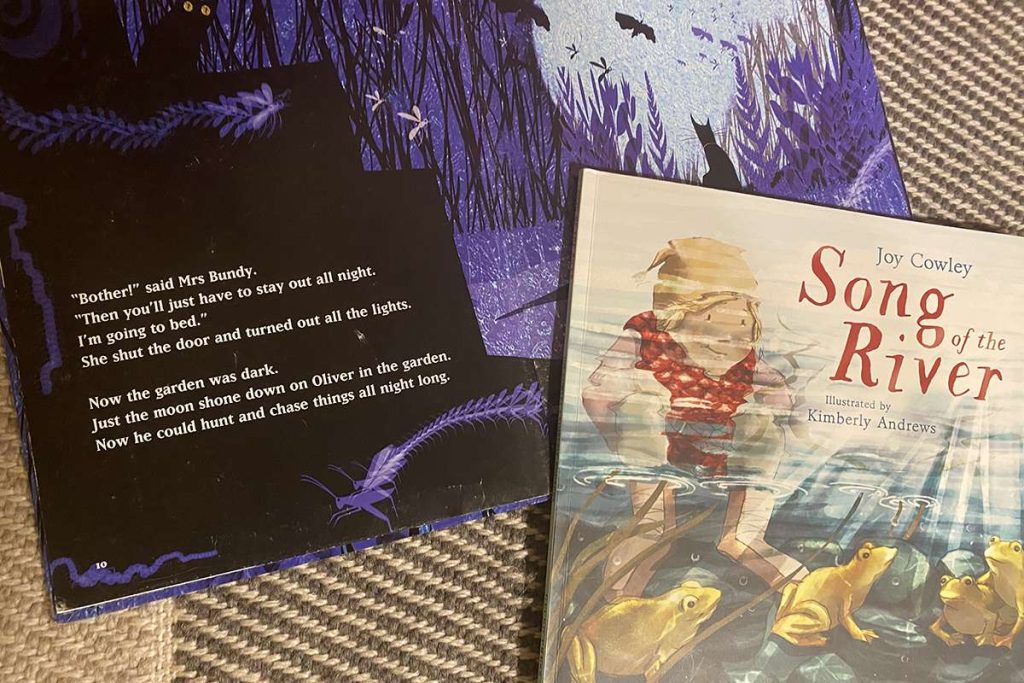
Authentic texts are written for trade publication. They are sold in bookshops and are in libraries. They are generally for enjoyment and to be read aloud to children so tend not to be governed by strict guidelines. They use the poetic crafting that authors decide on.
Benefits of using decodable texts as first texts for teaching reading
Reading involves making links between graphemes and phonemes, using these to decode a word and then checking them with the word’s meaning. We need to make a connection letter by letter at first with CVC words, which are dependable patterns. Decodable texts offer specific opportunities for learners to build the word from its parts so they can hold and later recall it. The process of decoding the word in this grapheme-to-phoneme way strengthens the pathways in the brain that learners need to read other words. Decodable texts use high-frequency words sparingly.
In a decodable text, learners get multiple opportunities to see the same pattern using different words and to lock that in. In contrast, a non-decodable text tends to have many different word patterns. It gives learners few opportunities to work with one pattern with a focus that pays off for word mapping. As the brain wants patterns, having a broad range of them can be confusing for the developing reader.
The following examples of decodable texts give a breakdown of the words used and sentence length.
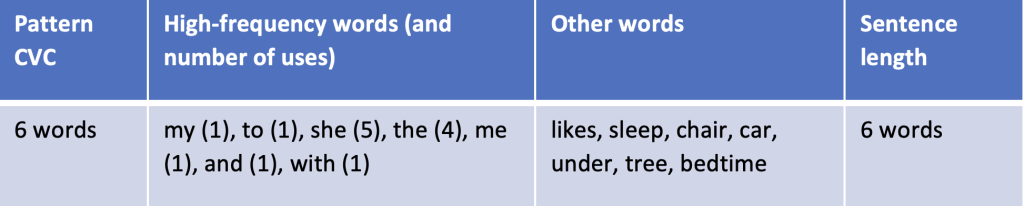

The main benefit of decodable texts is that practice in word patterns happens gradually and cumulatively. For example, securing the CVC pattern helps with reading longer words because almost 40% of English words include a CVC syllable.
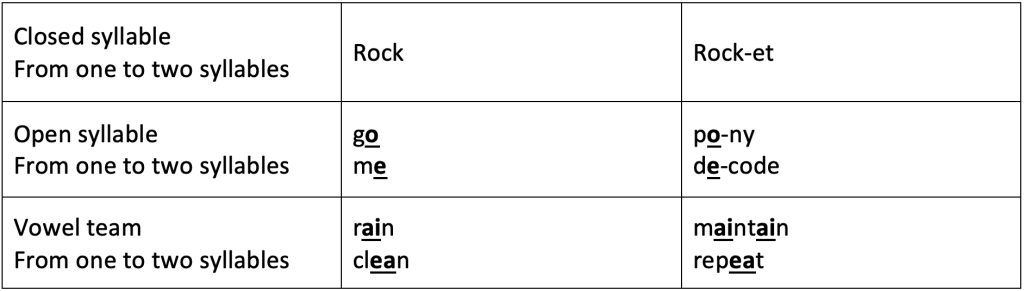
Following a scope and sequence for teaching word patterns therefore benefits the learner. First, it gives them time to secure early patterns such as CVC words and gain for success with that pattern. Second, it strengthens the neural pathways and brain architecture for reading more advanced patterns and a wider range of words.
Disadvantages of decodable texts
Although decodables offer wonderful opportunities for learning to read, they come with challenges too. One possible consequence of using decodable texts is that learners face a high decoding load. Many decodables contain words that learners do not have in their oral vocabulary and will not come across often. As a result, learners may not get the chance to map the word and must decode it every time they encounter it. For example, if a learner rarely comes across stump, they must process its five sounds together when meeting it in a decodable.
Because decodable texts are designed for high exposure to specific spelling patterns, they usually contain a lower ratio of high-frequency words. Yet high-frequency words help to glue the sentence together for the learner. In a text that limits their use, the learner’s reading can be slow and laboured, and possibly doesn’t achieve the long-term pay-off. In addition, exposure to high-frequency words is important for mapping them.
To ultimately read authentic texts, learners need the opportunity to secure many high-frequency words. Regular exposure to high-frequency words, so learners need not decode every word, supports reading fluency and in turn comprehension. For this reason, when teaching reading, we may need to look beyond a diet of decodable texts alone.
Teaching reading tips for branching out into other texts
Current research offers little evidence on how long or even whether learners need decodable texts before they read controlled language or natural language texts. However, it seems logical that learners will benefit from using a sequence of dependable texts in which spelling patterns become increasingly complex.
How long will a developing reader need to use decodable texts? That time will vary. Learners who take a bit longer to ‘make the maps’ might need more time with controlled, decodable texts. What is vital to answering this question is the teacher’s assessment of and response to the individual learner’s progress. Considering the ‘opportunities and challenges’ of each text helps you to identify teaching steps needed to support learners with that text.
The following are some suggestions based on the individual learner’s level of reading.
Very early reading
In the early stages of reading, a learner mainly reads decodable texts that follow a scope and sequence. For example, you might mainly use a series like the Phonics Plus (Ready to Read) until the learner has secured knowledge of the short vowel sound CVC words and some vowel teams.
You can then introduce some controlled or predictable texts as a shared reading, where you read the text first and learner follows with finger pointing. Suitable texts combined with this type of teacher support include some of the early colour wheel books. They give developing readers much more exposure to high-frequency words than is available from a decodable series.
In terms of teaching practice, most of the week would involve using decodable texts and a scope and sequence focus. Once a week, you might bring together a larger, more diverse group of readers to read a levelled text. The levelled text needs strong teacher support and no guided guessing to read words. The learner points as the teacher reads. For example, you could say:
- “Find the on this page” (and on the next, and the next)
- “Look at what a long way we slid our fingers under the word tomatoes”.
As well as helping to secure more high-frequency words, these texts give learners experience of normal sentence rhythm and multi-syllable words.
Always engage learners by sharing wonderful read-aloud texts as well.
Moving on
Once learners can easily decode most CVC words and have secured some vowel team patterns, they begin to see more patterns. At this stage, in place of an educator teaching reading, self-teaching becomes more important. Learners will now benefit from a wider range of texts. Some learners may still need decodable texts that highlight specific patterns as their core texts. Others may benefit from texts that impose less control over the patterns. Words have some statistical dependability that learners can draw on. For example:
- two vowels together will generally be a long vowel sound
- a split digraph (magic e) usually makes a long vowel sound
- certain letters do not go together at the beginning of a word (eg, sd, sb, gt).
Older learners who struggle to secure decoding will also benefit from a range of texts. The cognitive load of a decodable text can be high when it contains few ‘rest’ words that learners have already mapped. High-frequency words help with sentence flow and allow a learner to focus on the words they do need to decode. Decoding strategies will still involve:
- looking all through the word (no guessing)
- identifying the vowel nucleus
- pronouncing the word
- altering the pronunciation as necessary based on word meaning.
For example, a learner might first read tidal as “tid-al” (short vowel tid). But then, on reflecting that the book is about waves, they flex the pronunciation to a long vowel, “ti-dal”.
In your teaching practice, continue to use decodable texts for teaching specific spelling patterns from a scope and sequence. Use levelled or controlled texts to expose learners to a variety of syllable lengths, high-frequency words and topics.
At this stage, you can use your knowledge to judge if a text will be appropriate for the learners. Also consider which words learners will need support with and what background knowledge they will need before reading. Some book series come with teacher notes or teacher booklets to support planning and teaching.
Levelled texts may be helpful, especially when using a combined approach of teacher and learner reading to support students to access them. For example, with echo reading the teacher reads a sentence and the learner reads same sentence after that. Look at the word patterns in these texts and think about what strategy learners will need to be successful. Some learners will surprise you and self-teach the new patterns. Others will need to be specifically taught more about the pattern.
Readability is much more than decodability when teaching reading
It is not just predictable word patterns that present learner readers with opportunities for progress. Well-designed layout, supportive diagrams and headings, appropriate sentence lengths and well-constructed paragraphs all add to readability. Book series designed around ease of readability support struggling readers because they consider a range of features, not just decodable patterns. Their design features can provide rest pages for a struggling learner. Some texts designed for decodability are not actually easier to read than texts carefully designed for readability. Moreover, once learners have enough code knowledge, experience of words with tightly controlled patterns becomes less important than other features of text.

Texts for struggling older learners reduce the cognitive load by keeping sentences simple and short. This approach helps learners to identify the subject, verb and additional information. Generally these texts avoid compound sentences. However, you may find the simple sentences in the book are useful for sentence-combining activities.
Other advantages of these texts are that they offer topics that engage older learners and provide opportunities to increase their general knowledge. With the limited amount of information on any double-page spread, it is easy to read, process and discuss key ideas.
Once either younger learning or older struggling readers secure the early decoding strategies, consider expanding the range of texts you use when teaching reading.

Conclusion
When teaching reading, there are a range of texts you can use to support learners’ progress. Whether you use decodable, controlled language, natural language or authentic texts depends on the learners in front of you. You need to consider the learners’ decoding ability but also the stretching that is possible with teacher support. Noticing the support learners require when reading any text is a vital teaching strategy. It is important as it expands learners’ capability within a guided reading experience.
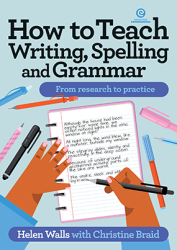
For more advice on teaching writing, spelling and grammar check out Christine’s latest book. Equally, don’t forget to check out our popular Story Seekers series.
About the author
Dr Christine Braid has 40 years’ experience as an educator, including 12 years as a classroom teacher and 25 years as a teacher educator with a focus on literacy teaching. In her academic studies, she has specialised in literacy: she has a Diploma of Children’s Literature, her MEd thesis looked at using picture books for developing comprehension discussion with older primary students and her PhD examined the influence of teacher knowledge and practice on literacy outcomes for new primary students. Combining her practical and her experience, Christine works with teachers to promote systematic and explicit teaching and to provide opportunities for incidental learning. Christine has a particular enthusiasm for finding ways to inspire teachers and children using books.