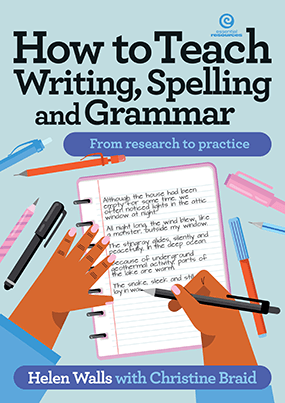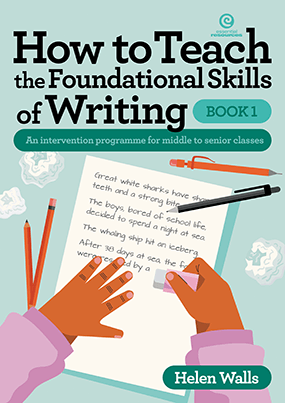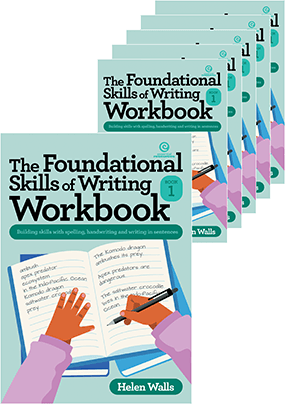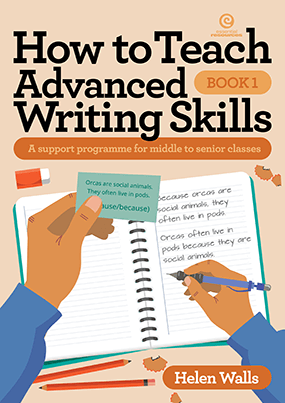
Favourite childhood book that got you hooked on reading?
The Alex trilogy, by New Zealand author, Tessa Duder – about a young swimmer’s quest to become an Olympian. I read these when I was about 12. I think I told my Dad, “You have to read these books” – LOL!
What's a book or resource to inspire young writers?
Non-fiction, scientific writing works really well for many students. I love to display an image or play a short video of something awe-inspiring and share key knowledge with a class. Go-to-topics include: scary animals, ocean life, dinosaurs, tsunamis and the solar system.
What’s one small tweak teachers can make tomorrow to boost student writing?
Have students think, write and check for every sentence. They need to compose the sentence in their mind, write it and check it straight away – making tidy corrections (using a rubber) on the go. This is much more manageable and leads to much better sentences than the ‘just write’ approach to drafting.
One literacy misconception you wish more teachers knew about?
Teaching sentence structure should not be a boring exercise in labelling subject, verb, coordinating conjunction etc. Instead, it should be joyful and creative.
We can use sentence combining as the key research-informed method. This involves providing students with two sentences on a topic and asking them to combine the sentences in different ways, reflecting on the impact of the change.
What’s an “aha!” insight you hope every teacher gains from your PD?
We must prioritise the teaching of handwriting for three main reasons:
- Handwriting is to writing what phonics is to reading – it’s that important. Students need to be able to form all letters easily so that this skill does not occupy all of their thinking while writing.
- Being able to handwrite well is essential to confidence and leads to greater motivation to write.
- When we teach handwriting we are building the brain’s architecture for learning to read. Only handwriting activates the brain’s orthographic mapping pathway. Typing does not. Working with letter tiles does not.
What advice do you have for teachers during this time of change?
Teachers need energy and confidence – yours is the most important and most demanding of all jobs. Use research informed methods AND have fun with your beautiful students as much as you can, every day.
About Helen Walls
Dr Helen Walls is a professional learning facilitator and educational researcher, with 20 years’ experience working in schools. She is committed to raising achievement in writing by sharing evidence-based, practical methods to engage every student. Helen is managing director of The Writing Teacher, a consultancy that provides writing workshops and resources for teachers, all accessible online. She is also a member of the Massey University school support team. For her PhD thesis, Helen conducted two empirical studies into the teaching of writing, which included a trial of the Fast Feedback Formative Evaluation System outlined in this book. She has published with The Australian Journal of Learning Difficulties and The Education Hub.