If you started the 2026 school year with a looming sense of “where do I even begin?” – you were in very good company! The Mathematics and Statistics Learning Area of the New Zealand curriculum is the most significant overhaul to maths teaching in a generation, and it asks a lot of teachers: new content, new structures, new expectations, new time commitments – all at once. This guide is here to help you make sense of the NZ maths curriculum, so you can spend less time decoding documents and more time doing what you do best – teaching your ākonga!
What is Te Mātaiaho maths?
Te Mātaiaho is the refreshed New Zealand Curriculum Framework that now underpins all teaching and learning across English-medium state and state-integrated schools. For Mathematics and Statistics, it replaced the 2009 curriculum for Years 0–10 and came into full effect in January 2026.
At its heart, the new Mathematics and Statistics learning area is built on a clear purpose: to arm students with both the theoretical and practical understanding of the subjects, in order make sense of the world around them. It goes beyond the need to calculate correctly, and aims to enable our ākonga to think logically, reason critically, recognise patterns and make connections across “quantity, space, time, data and uncertainty.”
This shift means that the curriculum now explicitly positions mathematics as a creative discipline, one that “sparks curiosity”, builds confidence and “reflects the contributions of diverse peoples and cultures over time.” (Tāhūrangi – New Zealand Curriculum – Mathematics and Statistics Phases 1–4 (Years 0–10))
What are the six strands of the new NZ maths curriculum?
The Mathematics and Statistics Learning Area structure is organised into six strands, each developed across year-by-year teaching sequences.
- Number – how numbers represent quantities, support estimation, and underpin calculation
- Algebra – patterns, relationships, and the use of symbols to generalise mathematical thinking
- Measurement – units, estimation, and applying measurement in practical contexts
- Geometry – shape, space, position, and transformation
- Statistics – gathering, representing, and interpreting data
- Probability – exploring chance and uncertainty
However, these strands are not taught in isolation. One of the distinctive features of the new curriculum is the way it weaves them all together. Mathematical practices are developed alongside content knowledge – such as noticing patterns, justifying reasoning and selecting appropriate approaches.
What has changed in the NZ Maths curriculum?
The biggest structural change is the replacement of NZ curriculum levels with phases of learning for maths.
Instead of Levels 1–5, the curriculum is now organised into four phases.
- Phase 1 maths: Years 0–3 – building foundational number knowledge, counting, grouping and early operations.
- Phase 2 maths: Years 4–6 – extending to place value, fractions, multiplication and division, and beginning to work across all six strands.
- Phase 3 maths: Years 7–8 – deepening understanding of proportional reasoning, algebra, and more complex data and statistical thinking.
- Phase 4 maths: Years 9–10 – moving toward abstract thinking, proof, and more sophisticated statistical and algebraic reasoning.
Each phase comes with a year-by-year teaching sequence – a detailed, ordered map of the knowledge and practices students are to develop. This is a significant change from the previous curriculum, which gave schools more flexibility in sequencing but could lead to inconsistency about what students were taught and when.
Sample of a teaching sequence from Year 4 Number or Measurement
The year-by-year teaching sequence is now the central planning tool. It specifies not just what to teach but when, making it much easier to maintain progression and consistency across year groups and across schools.
What does this mean for New Zealand primary and secondary teachers and schools?
There is no escaping that the curriculum changes have been a steep learning curve for everyone. For many teachers – particularly at the primary level, some of the Year 4–6 content is completely new territory. Whether that is working with probability as a formal strand, developing more explicit algebraic thinking, or following a tighter year-by-year sequence – everyone has had something to struggle with.
For school leaders at every year level and phase, the challenge is just as real. Being asked to support teams to implement a new curriculum with clarity and confidence, while keeping planning time manageable and student outcomes moving in the right direction is no easy task.
What matters most in your implementation of the NZ maths curriculum?
- Understand the phase your students are in
Phase 2 (Years 4–6) is where many primary teachers will be focusing their attention. The maths achievement objectives at this phase build directly on Phase 1 foundations – particularly place value, addition and subtraction strategies, and early multiplicative thinking. If students arrive in Year 4 with gaps from Phase 1, those gaps will compound quickly.
Phase 3 (Years 7–8) brings its own specific demands for intermediate and secondary school classrooms. Teachers can no longer assume students have done fractions or covered algebra in Phase 2. The year-by-year teaching sequence specifies exactly what representations and reasoning students should be working with at each point. If a student arrives in Year 7 without their Phase 2 foundation secure, the gap is visible – and the sequence tells you precisely where to look for it.
- Use the year-by-year teaching sequence as your planning anchor
Rather than mapping backwards from where you hope students will be, use the year-by-year teaching sequence as the starting point for your maths programme.
- Plan for structured, repeated practice
The new curriculum places a clear emphasis on fluency. Students need repeated, purposeful opportunities to consolidate knowledge, not just to encounter things once. This means maths practice resources that align directly with the teaching sequence are not just helpful – they are essential.
What are some useful mathematics resources for NZ teachers?
Finding specific resources that are aligned to the new NZ maths curriculum, has been one of the real pain points of the curriculum change. Fortunately, these are now starting to become available. Here are some places to start.
- Tāhūrangi is the official home of the new curriculum documents. The year-by-year teaching sequences for each phase are available here, along with planning guidance and support materials. If you have not already spent time with the Phase 2 teaching sequence for Years 4–6, this is the best first step.
- The Education Hub offers plain-language summaries of the NZ maths curriculum changes and practical implementation advice for busy teachers.
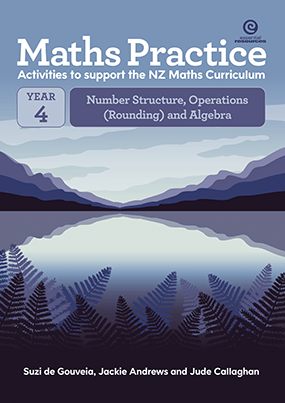
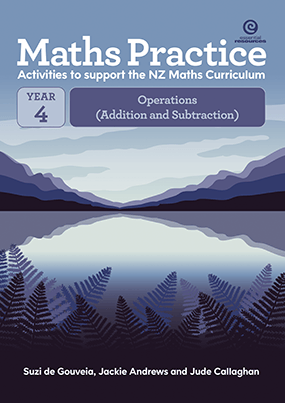
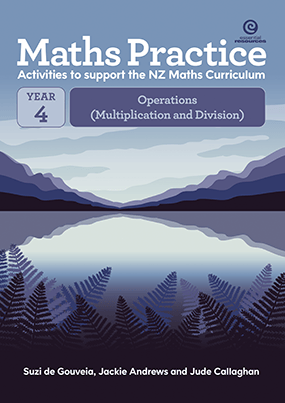
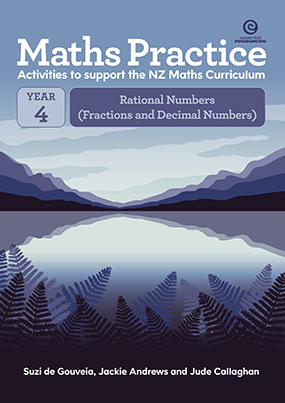
- Essential Resources’ Maths Practice collection – This range of practical activity books has been developed specifically for the latest New Zealand Mathematics and Statistics curriculum.
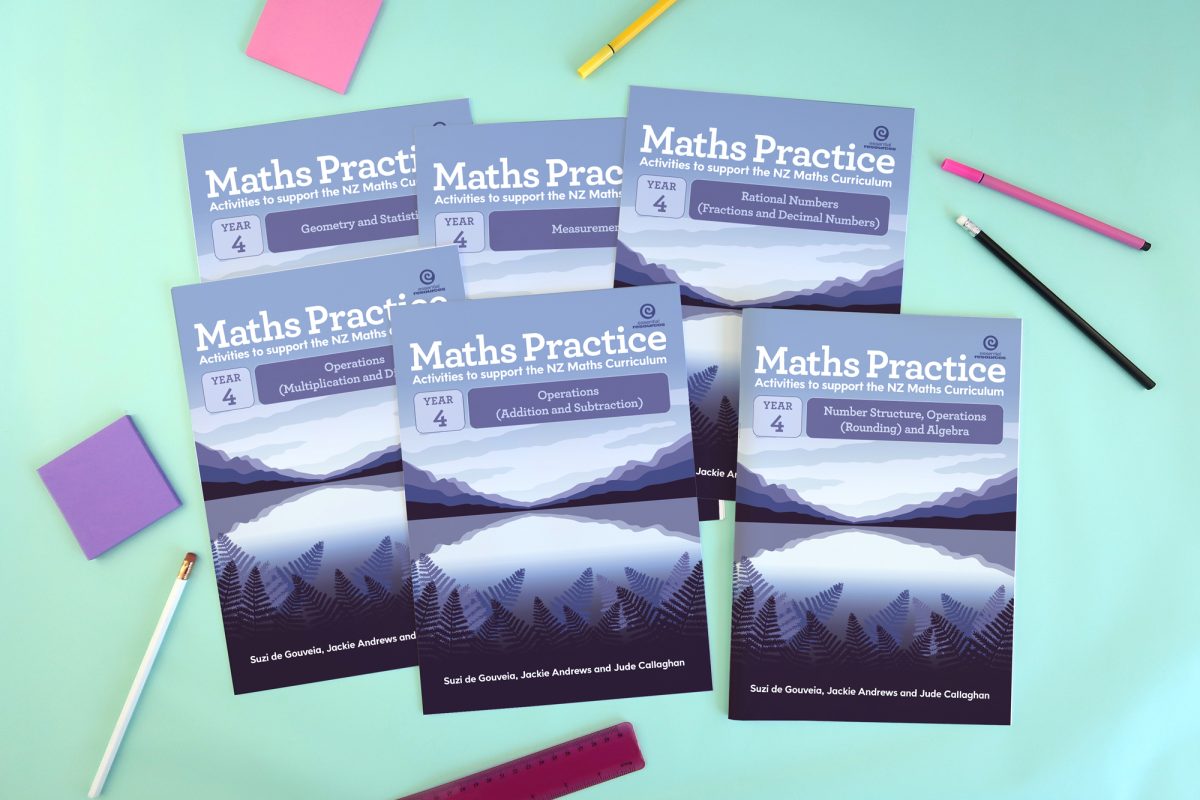
This maths series works systematically through the teaching sequence at Year 4. They cover five strands: Number, Algebra, Measurement, Geometry and Statistics. Written by highly-experienced New Zealand teachers and leaders, the books provide ready-to-use, curriculum-aligned practice activities that you can slot directly into your teaching programme – whether for consolidation, targeted support or whole-class reinforcement.
- The Education Review Office (ERO) has a range of easy-to-read reports and guides for school leaders that shine a light on how the new Maths and Statistics curriculum is faring across the motu. Their insights openly identify patterns and challenges that are shared universally among schools.
How can I make systematic maths practice work in my classroom?
Structured practice is one of the most evidence-informed ways to build fluency and long-term retention in mathematics. But not all practice is equal. Here is how to make it count.
- Align your practice activities to the teaching sequence
Practice activities should reinforce what you have just taught, in the order it appears in the year-by-year sequence. If your students are working on place value in Number during Week 4, their practice activities should be reinforcing place value – rather than jumping ahead or revisiting content from a previous phase. - Use your practice activities flexibly
The same set of activities can serve different purposes depending on when and how you use them. Use them after direct teaching for consolidation, in small groups for targeted instruction, or as independent tasks for students who need additional repetition. Good maths practice materials are designed to flex with you. - Build in retrieval
Research on learning consistently shows that students retain knowledge better when they return to it over time, not just immediately after learning it. Build short retrieval tasks into your maths block across the week – five minutes revisiting last week’s place value content before moving to today’s work on rounding makes a real difference over time. - Do not skip the foundational strands
ERO reports that Number received the greatest level of attention in classrooms to begin with. This was partly because teacher confidence was higher in this area – but there was also an identified need to level-up students in this discipline before progressing them onto the other curriculum expectations.
Education Review Office (October 2025) – A new chapter: How well are the changes to English and maths going?
Despite this early focus on Number, the new curriculum makes it clear that Algebra, Measurement, Geometry, Statistics and Probability all have dedicated, year-by-year content expectations too. Systematic practice across all six strands is what will give your students a strong mathematical foundation – and will build up your own maths knowledge overview.
The NZ maths curriculum in summary
The new NZ Maths and Statistics curriculum is a genuine opportunity to strengthen mathematics teaching across New Zealand – not just meet compliance requirements. It gives teachers a clearer map, more explicit expectations, and a stronger foundation to build on. What it needs now is more practical support to put it into action.
That is exactly what the Essential Resources Maths Practice series is designed to provide. Curriculum-aligned, classroom-ready, and built by experienced New Zealand teachers and leaders to help New Zealand classrooms.
We wish you all the best for your Maths and Statistics implementation this year and beyond!