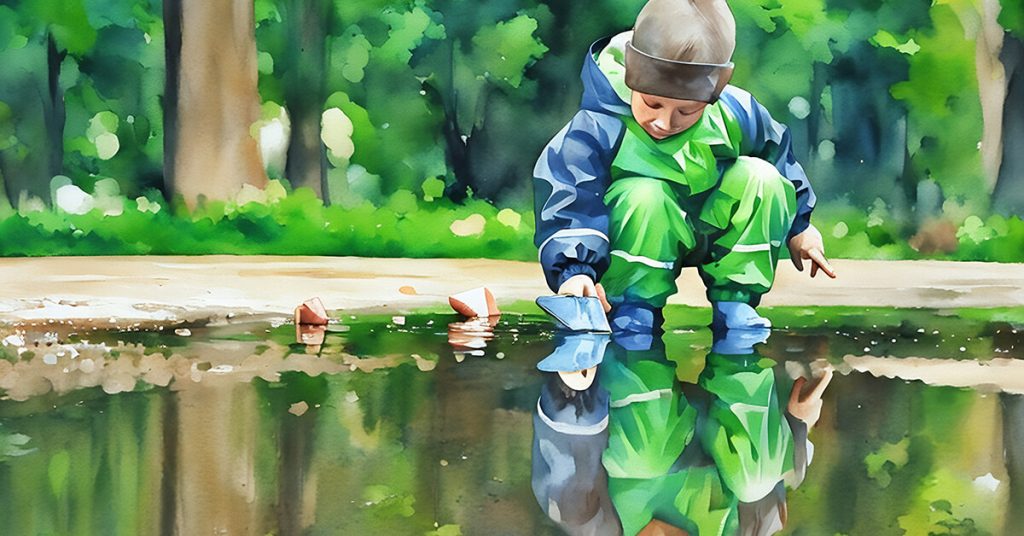
Outdoor play in early childhood is far from a break from the “real” educational program. For children across Australia and New Zealand, the outdoor environment is a powerful context for learning, wellbeing and development. When thoughtfully designed and intentionally supported, outdoor learning in early years settings fosters curiosity, resilience, language, physical competence and a deep connection to the natural world.
Join us as we explore the benefits of outdoor play in ECE, practical approaches to outdoor play pedagogy, and guides on how to design early childhood outdoor environments that are safe, inclusive and aligned with the EYLF, NQS and Te Whāriki.
What are the benefits of outdoor play in the early years?
The benefits of outdoor play are well documented. Research consistently shows that play-based experiences are a vital vehicle for children’s learning and development. Through sensory exploration – seeing, touching, hearing, moving – children build cognitive, social and physical capabilities.
Outdoor play in early childhood particularly supports:
- physical development in early childhood – climbing, balancing, running and rough-and-tumble play build strength, coordination and risk assessment skills
- social competence – outdoor spaces encourage collaboration, negotiation and shared problem-solving
- emotional wellbeing – time in nature supports regulation, resilience and a sense of calm
- language development – open-ended environments invite rich conversations and storytelling.
For many children, outside is where they feel most confident and expressive. In A Place to Talk Outdoors, Bridie Raban and Elizabeth Jarman highlight how outdoor learning experiences provide powerful contexts for developing speaking and listening skills. Reviewing your outdoor environment through a language lens can transform it into a space that actively supports communication and sustained shared conversations.
Outdoor learning in early years settings also strengthens children’s relationship with the natural world. Nature-based play invites wonder, inquiry and respect for living systems – foundations for lifelong sustainability.
How can educators support learning through outdoor play?
High-quality outdoor play in ECE does not happen by accident. It requires intentional planning, reflective practice and strong outdoor play pedagogy.
A common misconception is that the real learning only happens indoors. Yet outdoor program planning can be just as rich – if not richer than indoor experiences.
Educators can:
- engage in sustained shared conversations during child-led outdoor play
- introduce loose parts to encourage creativity and problem-solving
- offer provocations connected to children’s interests
- support children to test theories and revisit ideas over time.
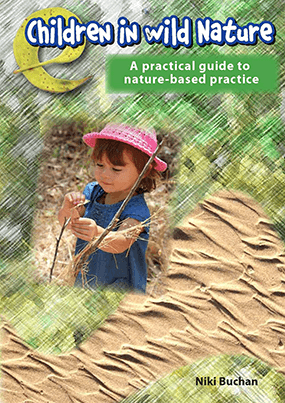
Children in Wild Nature by Niki Buchan provides a practical guide to nature-based play, drawing on bush, forest and beach school approaches. The book supports educators to unpack legislative requirements while embracing challenge, adventure and joy. Its case studies illustrate how dynamic, complex environments nurture curiosity and persistence – dispositions central to learning through play.
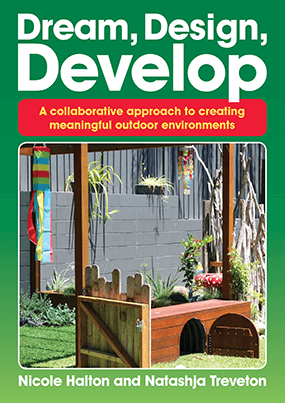
Similarly, Dream, Design, Develop by Nicole Halton and Natashja Treveton offers a collaborative approach to ECE outdoor environment design. Through research, photographs and real examples, it guides teams to move beyond trends and create natural outdoor play spaces that genuinely respond to children’s needs.
How do you design engaging and safe outdoor environments in ECE?
Thoughtful early childhood outdoor environments balance challenge with safety. The outdoor environment often presents additional hazards – weather, wildlife, uneven surfaces, loose parts and potential escape points. However, awareness allows you to mitigate risks without eliminating meaningful experiences.
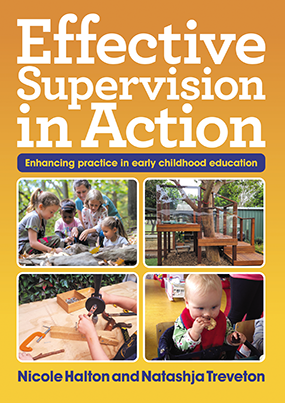
In Effective Supervision in Action, Halton and Treveton remind us that outdoor spaces are frequently where more incidents occur – not because outdoor play is unsafe, but because children engage in bigger, riskier movement.
They emphasise:
- regular safety inspections (including before returning outdoors after breaks)
- careful placement of equipment away from fences
- attention to fall zones and appropriate surfacing
- balanced setup of high-risk experiences to ensure effective supervision.
Softfall is not a substitute for supervision. Nor is compliance alone enough. Effective supervision requires educators to be present, attuned and responsive – not switching off when outdoors.
When designing ECE outdoor environment spaces, consider:
- clear sightlines for active supervision
- defined zones for high-risk activities
- flexible indoor–outdoor flow
- natural elements such as logs, rocks, gardens and water
- opportunities for quiet retreat as well as active play.
Risky play: supporting challenge, confidence and safety outdoors
Risky play in ECE is not about recklessness – it is about opportunity. Climbing trees, woodworking, balancing on planks, and rough-and-tumble play all support confidence, judgement and resilience.
Benefit–risk assessments help educators weigh developmental value against potential harm. Rather than removing challenge, adjust environments and supervision strategies to ensure children can safely test their limits.
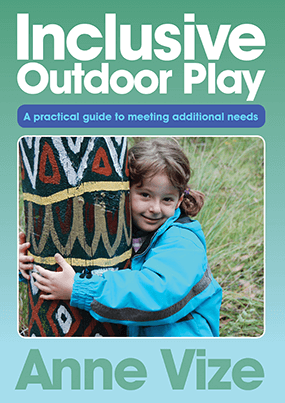
Inclusive Outdoor Play by Anne Vize reminds us that inclusive outdoor play spaces are possible with creativity and thoughtful adaptation. Children with additional needs benefit enormously from outdoor experiences physically, socially and emotionally. Inclusive design ensures every child can participate in meaningful outdoor learning experiences.
How does outdoor play link to EYLF, NQS and Te Whāriki?
In Australia, the Early Years Learning Framework (EYLF) calls on educators to create environments that encourage children to explore, solve problems, create and construct. Quality Area 3 of the National Quality Standard (NQS) emphasises that the physical environment must be safe, suitable and organised to support participation and program implementation.
Outdoor play in ECE directly contributes to EYLF outcomes including:
- Outcome 2: Children are connected with and contribute to their world
- Outcome 3: Children have a strong sense of wellbeing
- Outcome 4: Children are confident and involved learners
In Aotearoa New Zealand, Te Whāriki highlights exploration, wellbeing and belonging. Natural outdoor play spaces provide authentic contexts for children to develop mana, confidence and relationships with people, places and things.
Aligning your outdoor program planning with your relevant frameworks strengthens documentation, reflection and assessment – and ensures outdoor learning in early years settings is recognised as central, not peripheral.
Practical strategies and educator tips
Here are ways to strengthen outdoor play in early childhood within your service.
- Conduct regular environmental audits – review hazards, supervision zones and inclusivity.
- Engage children in design conversations – what would they like to see outdoors?
- Incorporate loose parts – tyres, ropes, planks and natural materials extend learning.
- Plan for language-rich interactions – intentionally create spaces for storytelling and discussion.
- Document outdoor learning – make the pedagogy visible to families and assessors.
- Develop benefit–risk assessments – support confident, informed decision-making.
- Invest in professional reading – deepen your team’s shared understanding of outdoor play pedagogy.
The books referenced throughout this article offer practical, research-informed guidance to help teams reflect, redesign and re-energise their early childhood outdoor environments.
Reclaim the power of outdoor learning
Outdoor play in early childhood is not a luxury, a trend, or simply a way to burn-off children’s energy. It is a powerful context for learning through play, supporting children’s wellbeing outdoors and fostering deep connections to nature.
By intentionally designing engaging, safe and inclusive early childhood outdoor environments, and aligning practices with the EYLF, NQS or Te Whāriki – educators can create outdoor learning experiences that are rich, meaningful and transformative.
If you are ready to strengthen your outdoor play pedagogy, make a strong start with any of the titles highlighted here. These trusted, practical resources will support your team to create natural outdoor play spaces where every child can thrive.